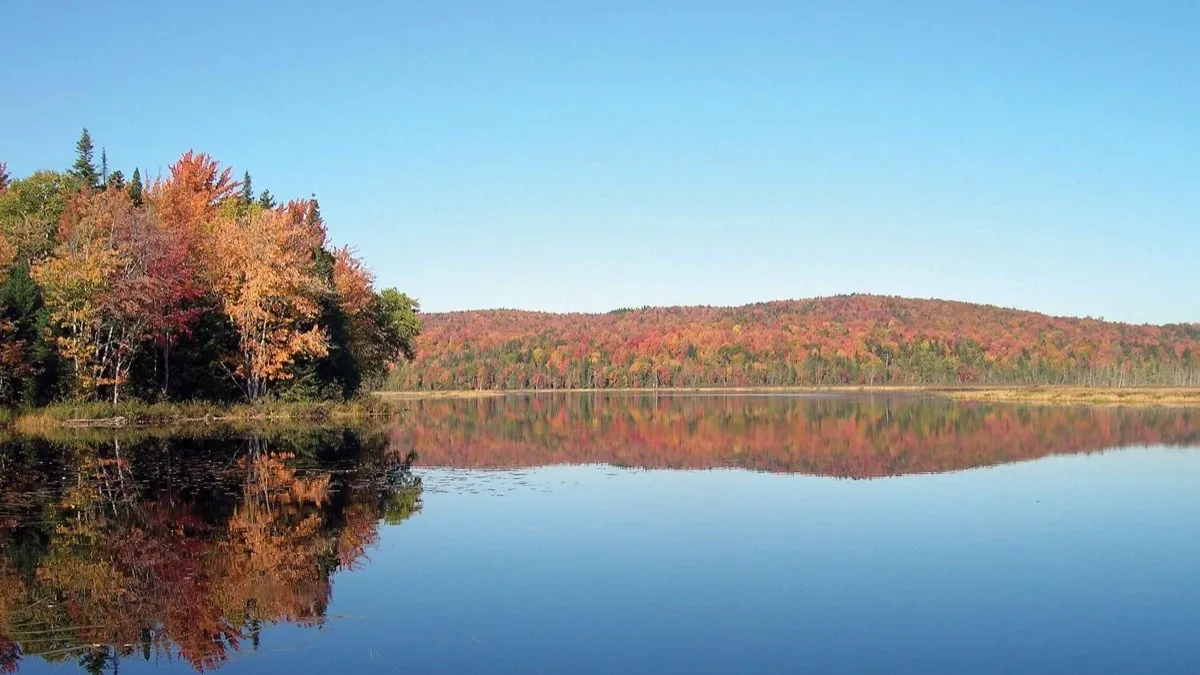
Every autumn, forests across much of the United States turn red, orange and gold, and millions of people travel to see them. The colors aren’t paint added in October. Many were in the leaves all along, hidden behind a green pigment that the trees stop making as winter approaches.
Green all summer: chlorophyll
Leaves are green because they are full of chlorophyll, the pigment plants use to capture sunlight and turn water and carbon dioxide into sugars through photosynthesis. Chlorophyll is constantly breaking down and being replaced during the growing season, and there is so much of it that it masks every other color in the leaf.
The signal: shorter nights and cooler days
As days shorten and nights grow longer in late summer and fall, trees respond by preparing for winter. Broadleaf trees can’t keep their thin leaves alive through freezing weather, so they shed them. Before they do, they reclaim valuable nutrients from the leaves to store over winter.
A layer of cells called the abscission layer forms where the leaf stem meets the branch. It gradually blocks the flow of water and nutrients into the leaf. Chlorophyll production stops, the existing chlorophyll breaks down and the green fades.
Yellows and oranges: there all along
As the green disappears, other pigments show through. Carotenoids, the same family of pigments that makes carrots orange and corn yellow, are present in leaves all summer. They produce the yellow and orange colors of trees such as birches, aspens, hickories and many maples.
Because carotenoids are already there, these colors are fairly reliable from year to year.
Reds and purples: made in the fall
The brilliant reds and purples of trees such as red maples, sugar maples, dogwoods and sumacs come from a different group of pigments, called anthocyanins. Unlike carotenoids, most anthocyanins are produced fresh in autumn, from sugars trapped in the leaves.
That is why weather matters so much for red colors. The brightest reds come after a run of sunny autumn days, which help leaves make sugars, followed by cool but not freezing nights, which keep those sugars in the leaf. A hard frost or a very warm, cloudy fall tends to produce duller reds.
Browns
The browns of oaks and some other trees come from tannins, compounds that remain after other pigments break down. Many oaks hold their brown leaves well into winter.
What makes a great fall season
- A healthy growing season with enough rain in spring and summer.
- Sunny fall days and cool nights.
- No severe drought, early hard frost or strong windstorms that strip leaves before they turn.
Drought stress can cause leaves to change early and drop quickly. A long, warm fall can delay color and make it less vivid.
Where and when
Fall color generally starts in the far north and at higher elevations in September and moves south and downhill through October and November. New England, the Upper Midwest, the Appalachians and the Rocky Mountain aspen forests are among the best-known destinations, but nearly every region has native trees that put on a show. Many state forestry agencies and the U.S. Forest Service publish fall color updates during the season.
Why evergreens stay green
Pines, spruces and firs have narrow needles with a waxy coating and other adaptations that help them survive winter cold and dryness, so they keep most of their foliage year-round and can photosynthesize whenever conditions allow.
What we think
Fall foliage is one of nature’s most visible bits of chemistry. The yellows and oranges are a reveal of colors that were there all summer, while the reds are a final, fresh investment the tree makes as it shuts down for winter.
It is also a reminder of how much weather shapes the natural world. The same trees can look dazzling one year and dull the next, depending on a few weeks of sun, rain and frost.