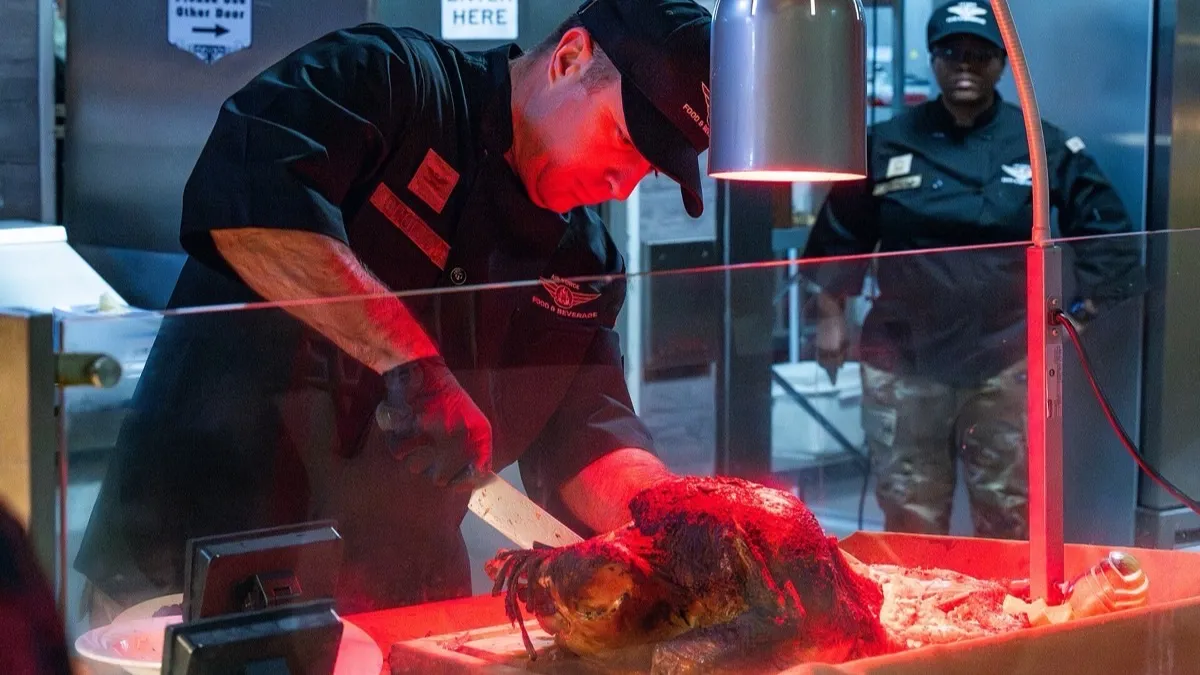
Thanksgiving falls on Thursday, November 26, this year, and for millions of households the centerpiece is a turkey that is currently sitting in a freezer. Cooking a big bird for a crowd is one of the few times many people handle this much raw poultry at once, which is why the U.S. Department of Agriculture publishes detailed advice every year. Here is what matters, in the order you will need it.
How big a turkey to buy
A common rule of thumb is about one to one and a half pounds of turkey per person, which leaves some leftovers. For eight guests, that means a bird of roughly 8 to 12 pounds. Bigger birds take longer to thaw and cook, so if you are feeding a large group, two smaller turkeys can be easier than one giant one.
Thawing: start earlier than you think
Never thaw a turkey on the counter. As the outside warms up while the inside stays frozen, the surface can sit in the temperature range where bacteria multiply quickly. The USDA recommends three safe methods.
In the refrigerator (the easiest)
Allow about 24 hours for every 4 to 5 pounds of turkey, with the bird in its wrapping on a tray to catch drips. A thawed turkey can stay in the refrigerator for another day or two before cooking.
For Thanksgiving on November 26, that means moving the turkey to the fridge by about:
- 8 to 12 pounds: Sunday, November 22, or Monday, November 23
- 12 to 16 pounds: Saturday, November 21, or Sunday, November 22
- 16 to 20 pounds: Friday, November 20, or Saturday, November 21
- 20 to 24 pounds: Thursday, November 19, or Friday, November 20
In cold water (faster)
Submerge the turkey, still in leak-proof wrapping, in cold tap water. Allow about 30 minutes per pound and change the water every 30 minutes so it stays cold. A 14-pound turkey takes about seven hours. Cook it as soon as it is thawed.
In the microwave
This works for smaller birds that fit, following the microwave maker’s instructions. Cook the turkey immediately afterward, because some parts may have started to warm.
You can also cook a turkey from frozen. It is safe, but it takes about 50% longer, and you can’t remove the giblets until partway through.
Don’t wash the turkey
Rinsing raw poultry doesn’t make it safer. It splashes bacteria onto the sink, the counter and nearby food. Cooking to the right temperature kills the bacteria; washing just spreads them around.
Cooking: 165°F is the only number that matters
Roast the turkey in an oven set to at least 325°F. It is done when a food thermometer reads 165°F in three places: the thickest part of the breast, the innermost part of the thigh and the innermost part of the wing. Don’t rely on the color of the meat, the color of the juices or a pop-up timer alone.
Let the turkey rest for about 20 minutes before carving, so the juices settle and carving is easier.
Stuffing
The safest choice is to cook stuffing in a separate dish. If you cook it inside the bird, stuff it loosely just before roasting, and check that the center of the stuffing also reaches 165°F, even if the turkey itself is done.
Leftovers: the two-hour rule
- Refrigerate leftovers within two hours of cooking. Carve the meat off the bone and store it in shallow containers so it cools quickly.
- Eat refrigerated leftovers within three to four days, or freeze them.
- Reheat leftovers to 165°F, and bring gravy to a rolling boil.
If you get stuck
The USDA’s Meat and Poultry Hotline answers food safety questions, including on Thanksgiving Day: 1-888-MPHotline (1-888-674-6854).
What we think
Most Thanksgiving food safety problems start days before the meal, with a turkey that goes into the fridge too late and ends up half-frozen on Thursday morning. Look at the calendar above today, and put a reminder in your phone for the day your turkey needs to move.
If you buy one thing for the holiday, make it an instant-read food thermometer. It costs less than a bag of groceries, takes the guesswork out of roasting and keeps everyone at the table safe.