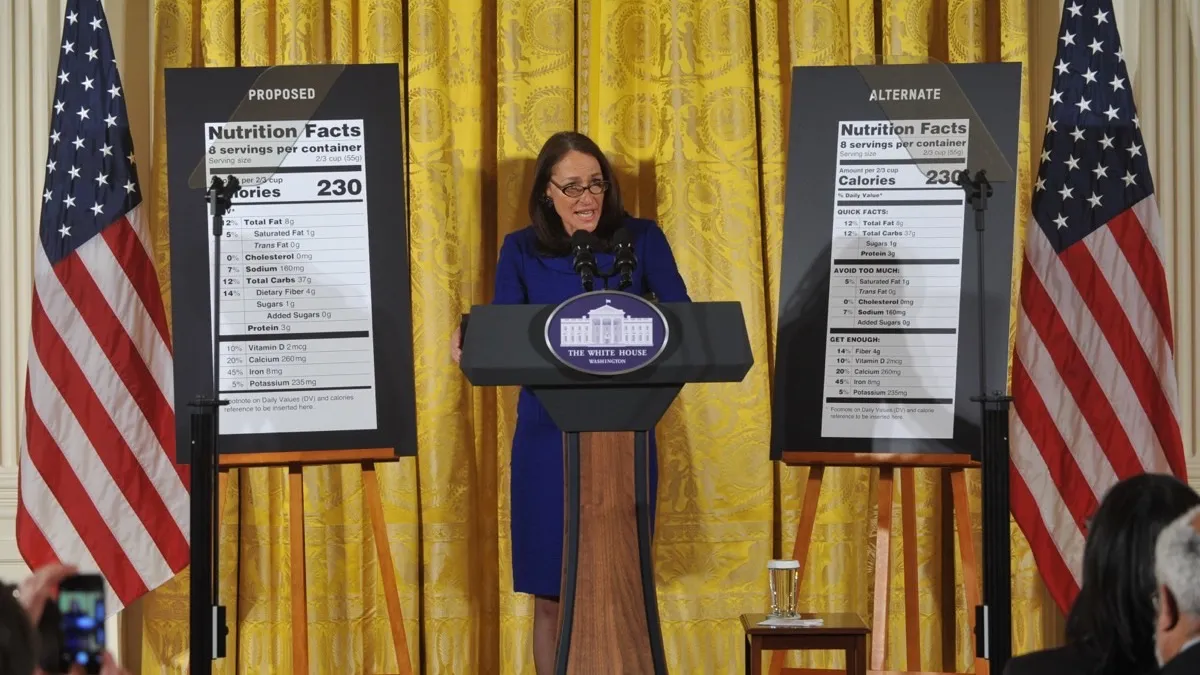
Almost every packaged food sold in the United States carries the same black-and-white box: the Nutrition Facts label, regulated by the Food and Drug Administration. It is one of the most useful tools for eating well, and one of the most ignored, mostly because it looks more complicated than it is.
The label got its biggest update in decades after the FDA finalized a new design in 2016. Calories are now printed in large bold type, serving sizes better reflect what people actually eat, and added sugars have their own line. Here is how to read it quickly.
1. Start with the serving size
Every number on the label refers to one serving, so check that first. The top of the label shows how many servings are in the package and how big one serving is, in a household measure like a cup or a number of pieces, and in grams.
The catch is that many people eat more than one serving. If a bag of chips lists 2.5 servings and you eat the whole bag, multiply every number on the label by 2.5. Some packages that people typically finish in one sitting now show a second column with the totals for the whole package.
2. Look at calories
Calories tell you how much energy one serving provides. The general advice on the label uses 2,000 calories a day as a reference, but your own needs depend on your age, sex, size and activity level. Calories are a useful comparison between two similar products more than a strict daily target.
3. Use percent Daily Value and the 5/20 rule
The %DV column shows how much one serving contributes to the total amount of a nutrient you should get, or not exceed, in a day, based on a 2,000-calorie diet. You don’t need to do any math. The FDA suggests a simple rule of thumb:
- 5% DV or less per serving is low.
- 20% DV or more per serving is high.
Use it in both directions. You generally want low numbers for the nutrients many Americans eat too much of, and high numbers for the ones they don’t get enough of.
4. Nutrients to keep low
The FDA highlights three nutrients that Americans generally eat too much of and that are linked to health problems such as heart disease and high blood pressure:
- Saturated fat, found in foods like butter, cheese, fatty meats and many baked goods.
- Sodium. The Daily Value is less than 2,300 milligrams a day, and much of the sodium Americans eat comes from packaged and restaurant food rather than the salt shaker.
- Added sugars, with a Daily Value of 50 grams a day.
5. Nutrients to get more of
Many Americans don’t get enough dietary fiber, vitamin D, calcium, iron and potassium. Look for higher %DV numbers on these lines, especially when comparing breads, cereals and snacks.
Total sugars vs added sugars
The label now lists total sugars and, underneath, added sugars. Total sugars include sugar that occurs naturally in foods like milk and fruit. Added sugars are the ones put in during processing, such as table sugar, syrups and honey, plus sugars from concentrated fruit juice. A plain yogurt and a flavored one may have similar total sugars, but the added sugars line shows which one was sweetened. There is no Daily Value for total sugars because no recommended limit has been set, which is why the added sugars line is the one to watch.
Putting it together in the store
You don’t need to read every line of every package. A practical routine:
- Check the serving size and how many servings you will really eat.
- Glance at calories.
- Scan saturated fat, sodium and added sugars for anything at 20% DV or higher.
- When comparing two similar products, pick the one with more fiber and less of the nutrients to limit.
Also read the ingredients list, which is ordered by weight from most to least. If sugar or a type of syrup appears near the top, it is a major ingredient.
What we think
The Nutrition Facts label is most powerful as a comparison tool. You don’t have to count every gram; just compare two cereals, two soups or two breads side by side for half a minute. Small swaps repeated week after week add up to a real difference in how much sodium and added sugar you eat.
This article is general information, not medical advice. If you have symptoms or questions about your own health, talk to a doctor, nurse or pharmacist. In an emergency, call 911.