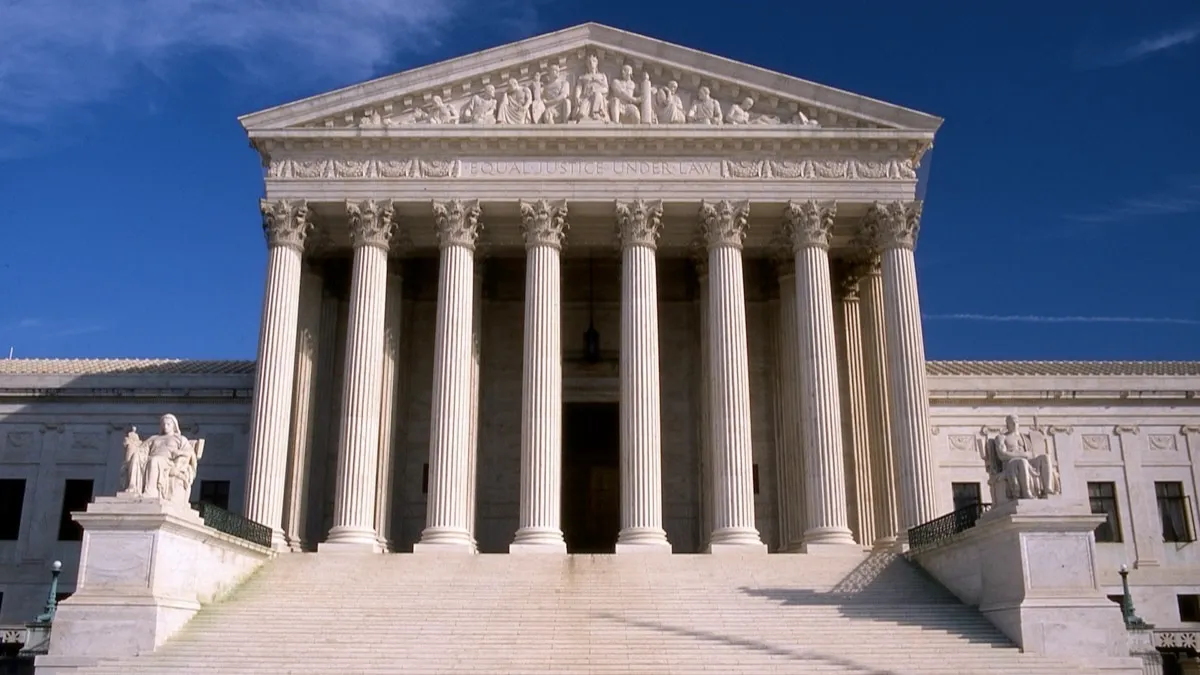
The Supreme Court opened its current term on the first Monday in October, as it does every year. Over the next nine months, the nine justices will hear arguments in a few dozen cases and issue decisions that can reshape American law. But the most important decision they make about most cases is whether to hear them at all.
Most cases arrive by petition
The Supreme Court has the final say on federal law and the Constitution, but it doesn’t have to take every appeal. In almost all cases, a party that lost in a lower court files a petition for a writ of certiorari, a formal request asking the Court to review the decision.
The Court receives several thousand of these petitions each year and agrees to hear only a small fraction, usually around 60 cases a term. For nearly everyone who files, the answer is no, and the lower court’s ruling stands.
The rule of four
The justices decide which petitions to accept at private conferences. By long tradition, a case is granted if four of the nine justices vote to hear it, even though five votes are needed to win the case itself. This is known as the rule of four.
Most justices share the first review of petitions through a “cert pool,” in which law clerks write summaries and recommendations that are circulated to the participating justices.
What makes a case likely to be heard
The Court’s own rules list the kinds of reasons it considers. In practice, these matter most:
- A split between lower courts. If federal appeals courts in different parts of the country have reached opposite conclusions on the same legal question, the law means different things in different states. The Court often steps in to settle it.
- An important federal question that hasn’t been decided, or a lower court ruling that seems to conflict with the Supreme Court’s own precedents.
- Cases involving the federal government, especially when the Solicitor General, who represents the United States before the Court, asks it to take a case.
- National significance, such as major constitutional questions or laws affecting millions of people.
From argument to decision
Once a case is granted, both sides file written briefs, and outside groups often file “friend of the court” briefs supporting one side. Then comes oral argument, usually about an hour in total, in which the justices question the lawyers, often interrupting with hypothetical scenarios.
A few days later, the justices meet privately and vote. The most senior justice in the majority assigns one justice to write the opinion of the Court. Drafts circulate for weeks or months, and justices sometimes change their votes along the way. Justices who disagree may write dissents, and those who agree with the outcome for different reasons may write concurrences.
Decisions are released throughout the term, with many of the biggest saved for late June, before the Court’s summer recess.
The emergency docket
Not every important order follows that process. The Court also handles emergency applications, for example requests to pause a lower court ruling while an appeal continues. These are often decided quickly, sometimes with short unsigned orders and no oral argument. Critics call this the “shadow docket” and say major decisions are increasingly made this way; defenders say emergencies require quick action. Either way, it is now a significant part of the Court’s work.
What we think
The Court’s power to choose its cases is easy to overlook, but it may matter as much as its rulings. By deciding which questions to take, and which to leave to lower courts, the justices shape the direction of American law.
For anyone following the Court this term, watch three things: which cases it agrees to hear, what it says in late June and what it decides quickly on the emergency docket in between.