When the new Congress convenes at noon on January 3, 2027, the House of Representatives cannot swear in its members, adopt its rules or pass a single bill until it does one thing first: elect a speaker. Usually that vote is a formality. Sometimes, as Americans saw in 2023, it becomes a week-long drama.
What the speaker does
The Constitution says only that the House “shall chuse their Speaker and other Officers.” Over two centuries, the role has grown into one of the most powerful in Washington.
- The speaker presides over the House and controls which bills reach the floor and when.
- The speaker leads the majority party in the House and shapes its legislative strategy.
- The speaker has great influence over committee assignments and the Rules Committee, which sets the terms of debate.
- Under federal law, the speaker is second in the line of presidential succession, after the vice president.
How the vote works
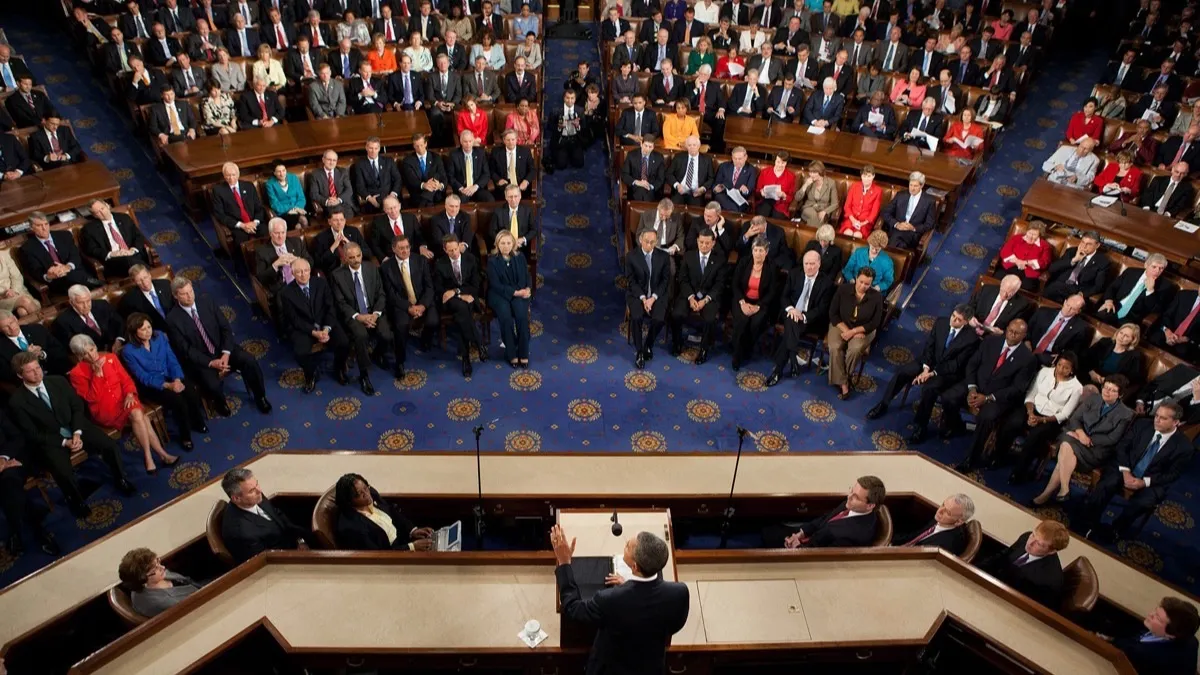
On the first day of a new Congress, the clerk of the House presides. Members are called in alphabetical order, and each one says aloud the name of the person they support. Members can also vote “present” or not vote at all.
To win, a candidate needs a majority of the members who vote for a named person. That detail matters. With all 435 seats filled and everyone voting for someone, the threshold is 218. If some members vote “present” or are absent, the number needed falls.
If no one reaches a majority, the House votes again, and again, until someone does. The House cannot move on to other business in the meantime.
A small quirk: the Constitution doesn’t require the speaker to be a member of the House. Every speaker so far has been one.
When it goes wrong: January 2023
For about a century, every speaker election was settled on the first ballot. That changed in January 2023, when Kevin McCarthy, the Republican leader, needed 15 rounds of voting over four days to win the gavel. A group of Republican members withheld their votes until he agreed to rule changes, including making it easier for members to force a vote to remove the speaker.
That rule mattered sooner than expected. In October 2023, a motion to vacate the chair succeeded, and McCarthy became the first speaker in history to be removed by a House vote. The House spent three weeks without an elected speaker, unable to pass legislation, before electing Mike Johnson.
Why narrow majorities make it harder
The speaker election shows how much a narrow majority depends on unity. If the majority party has only a few seats to spare, a small group of its members can block any candidate by voting for someone else. Members of the minority party almost always vote for their own leader, so the majority has to win on its own.
That gives small factions leverage. They can demand rule changes, committee seats or promises about legislation in exchange for their votes.
What happens after the vote
Once a speaker is elected, the longest-serving member of the House, known as the dean, administers the oath of office to the speaker, who then swears in all the other members together. The House then adopts its rules for the new Congress, which can reshape how much power the speaker has for the next two years.
What we think
The speaker’s power comes from holding a majority together, not from the title itself. When the majority is comfortable, the election is a ceremony. When it is narrow, the first vote of the year becomes a test of whether that majority can govern at all.
As the 2026 midterm results are finalized, watch the size of the House majority. It is the best predictor of whether January 3 will be a routine day or the start of another standoff.